Dual inference · cross-verification
Two independent paths infer simultaneously and their agreement is compared. On disagreement, re-inference or an uncertainty flag structurally reduces hallucination.
DUAL INFERENCE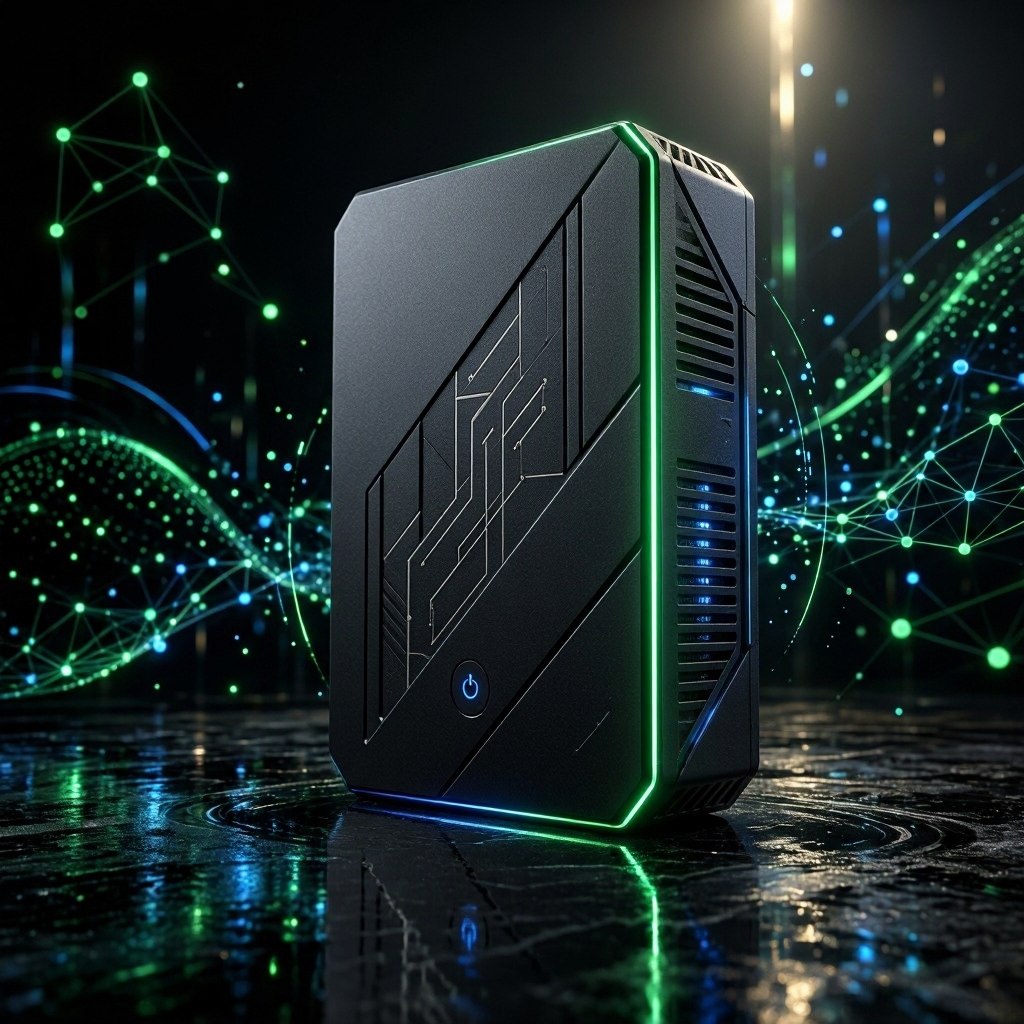
ECOMARCH / DIGITAL NEURON ENGINE ✓ VERIFIED
Digital Neuron is an inference engine that unifies inference, memory and verification into a single engineering discipline.
From an MoE pool of up to 3.4T parameters, it selectively activates only the experts a query needs, then cross-verifies results across two inference paths.
01 / PRODUCT LINEUP ✓ VERIFIED
Every product runs on the same Digital Neuron core and MoE architecture. Choose by deployment mode and domain.
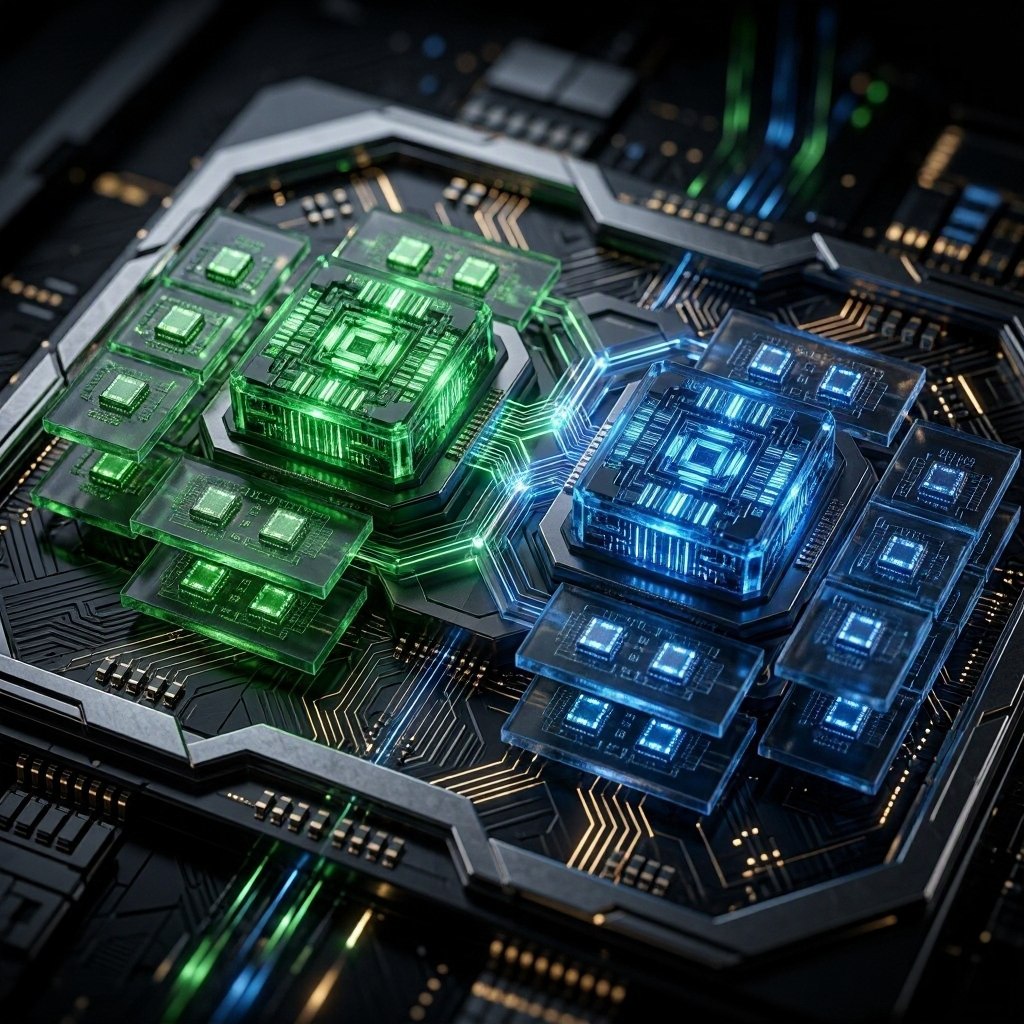
The integrated inference, memory and verification core. Structural reliability through MoE selective activation and dual cross-verification.
Learn more →Runs offline on your own hardware. Optimized down to i3-class CPUs and 16GB of memory.
Learn more →
Integrates with existing systems via REST and streaming endpoints. Private deployment options.
Learn more →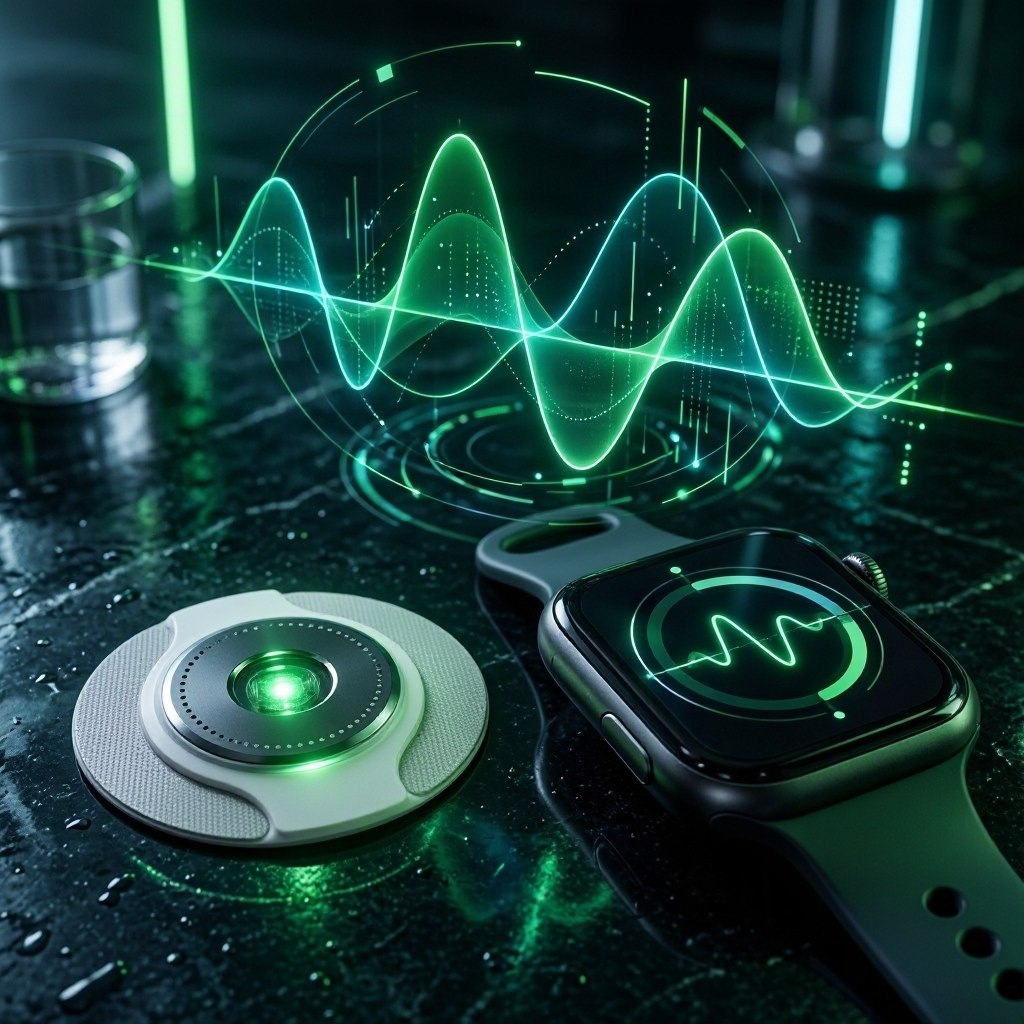
An all-in-one framework that builds agents via setup. First reference: wearable & medical analysis.
Learn more →
From requirements to executable code. Development automation linking collection, design, implementation and verification.
Learn more →The right mix of Local Node, API and domain engines depends on your security requirements, existing hardware and integration targets. We design it with you during an adoption consultation.
02 / DEPLOYMENT ✓ VERIFIED
Local Node completes everything on your hardware; the API endpoint integrates into existing systems. The core and cross-verification architecture are identical.
Inference, verification and memory updates all happen on in-house hardware. A design where data never leaves is the default.
The same Digital Neuron core, served as an endpoint. Inference and verification drop straight into existing services and pipelines.
03 / CORE TECHNOLOGY ✓ VERIFIED
Instead of growing model weights, we selectively retrieve only the knowledge needed and verify across two paths. Four engineering pillars support Digital Neuron.
Two independent paths infer simultaneously and their agreement is compared. On disagreement, re-inference or an uncertainty flag structurally reduces hallucination.
DUAL INFERENCEWeights stay fixed; knowledge lives in a separate memory layer. Add, edit and delete to reflect the latest information instantly — no retraining.
MEMORY-FIRSTMultiple logical channels over a single physical channel. Packet-layer information separates the two paths, reducing bottlenecks and wait time.
MULTI-LAYER CHANNELFrom an expert pool of up to 3.4T, only the experts a query needs are invoked. A 482B activation ceiling keeps compute and memory in check.
MoE · 3.4T / 482BFor an inference engine that handles internal documents and code, security is not an option — it is a precondition. Digital Neuron is built on fully local processing from the design stage.
Inference, verification and memory updates all run on in-house hardware. Prompts and documents are never sent to external servers.
Edge and air-gapped scenarios that run without an internet connection. Work continues through network failures or disconnection.
Knowledge is added, edited and deleted in a separate memory layer. Weights are never touched, so the change history of knowledge assets stays explicit and manageable.
04 / COMPANY ✓ VERIFIED
ECOMARCH Co., Ltd. — an inference-engine technology company built on computer manufacturing
ECOMARCH Co., Ltd. is a technology company founded in June 2024 on a computer manufacturing base (KSIC C26310). Moving beyond data-center-centric operation, we engineer a self-reliant inference ecosystem that runs on hardware owned by companies and individuals.
With the Digital Neuron inference engine at the core, we develop the Local Node, Neuron API, March Engine and AutoDev product line. A lightweight, high-efficiency MoE architecture with selective inference and cross-verification meets the demands of real working environments.
We began with responsive web, SPA, custom software and mobile SDK services, and expanded through our proprietary cross-platform engine E-march (with an extensible AI framework) into today’s inference-engine product line.
Min Hyun-jun, CTO (Chief Technology Officer), who gained security and network technology development experience overseas, leads our domestic R&D hub, driving technical advancement and commercialization centered on the Sokcho Data Center (199, Haeoreum-ro, Sokcho-si, Gangwon-do).
| Legal name | ECOMARCH Co., Ltd. |
|---|---|
| Founded | 2024-06-24 |
| Industry | Computer manufacturing (KSIC C26310) |
| Business Reg. No. | 553-88-03061 |
| Corporate Reg. No. | 124411-0396128 |
| Contact email | [email protected] |
Digital Neuron is not a race to scale model size — it is technology for producing highly reliable results on constrained hardware. By connecting inference, memory, cross-verification and development automation into a single system, we will deliver an AI environment companies can realistically put to work.
05 / NEWSROOM ✓ VERIFIED
Updates on ECOMARCH technology and commercialization.
Combining dual AI verification, memory-first learning and development automation, Digital Neuron demonstrates commercial-grade usability on Intel i3 · 16GB environments as it targets the local inference market.
Read the original article →Digital Neuron is designed around cross-verification between two models and storage in a separate memory layer, reducing the fine-tuning burden and expanding use into SME, security and edge domains.
Read the original article →Officially launched in Gimpo. Four service lines — responsive web, SPA, custom software and mobile SDKs — plus the proprietary cross-platform ‘E-march’ engine with an extensible AI framework, and a SaaS roadmap.
Read the original article →The shift from training-centric to inference-centric AI and edge market growth (projected $143B by 2034): the industry backdrop behind local inference adoption.
Read the original article →An insight report on overcoming public-LLM limits: local LLM build procedures and data-security hardening (reprinted from IDG).
Read the original article →Singapore-based Estha’s private local-AI workforce approach — an overseas case study on SME deployment and privacy.
Read the original article →Company articles follow public press releases; industry items are external references. Technical and business content is based on company-provided materials.
06 / ADOPTION FAQ ✓ VERIFIED
Answers for your adoption review — covering security, hardware, integration and knowledge operations.
07 / CONTACT ✓ VERIFIED
We welcome adoption consultations and pilot (PoC) collaboration for Digital Neuron, Local Node, Neuron API, March Engine and AutoDev.
CONTACT · EMAIL ONLY
[email protected]Inquiries are accepted by email only. Include your environment, scenario of interest and timeline for a faster reply.